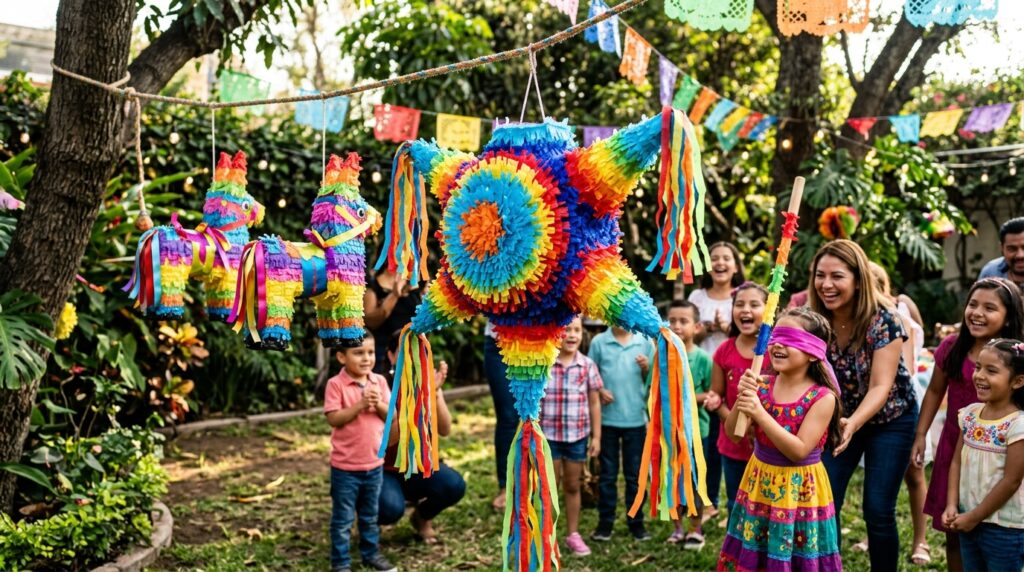
Paper mâché layering and a well-planned armature determine whether a handmade piñata holds its shape, supports its decorations and opens at the right moment. The strongest result rarely comes from piling on paper: it depends on a stable framework, overlapping strips, suitable paste and enough drying time between coats.
For a traditional party piñata, strength must be balanced with breakability. A shell that tears too soon can spill its contents before the game begins, while excessive structural reinforcement may turn a festive craft into an object that is difficult—or unsafe—to break.
Paper Mâché Layering for a Strong, Breakable Piñata
Paper mâché layering strengthens a shell by bonding overlapping strips into a continuous surface. Newspaper cut into strips about 1.5 inches wide works well: narrower pieces conform to curves, while broader ones cover flatter areas efficiently.
Dip each strip in a flour-and-water paste, then draw it gently between two fingers to remove excess. Place strips in overlapping directions rather than aligning every seam; this spreads stress across the surface and improves adhesive strength without creating unnecessarily thick ridges.
Layer Thickness and Drying Time
Two or three thin, fully dried coats are generally more useful than one heavy application. The exact number depends on the piñata’s dimensions, shape and intended toughness; a large form or one with projecting parts may need additional paper around those stress points.
Let each coat dry thoroughly before adding another. If the outer paper dries while the inner layers remain damp, the shell can stay soft, warp or develop an unpleasant odor. Airflow helps, but avoid rushing the process with intense heat, which can distort the form.
For a conventional party piñata, the goal is a firm shell that still gives way when struck. More layers do not automatically mean better construction; even drying and well-bonded overlaps matter just as much.
Armature Methods for Stable Piñata Shapes
The pinata armature sets the outline and carries the weight of the shell, decorations and contents. A balloon offers a smooth rounded body, while cardboard paper tubes can form limbs, handles or narrow extensions; masking tape secures these parts before paper is applied.
For angular designs, a cardboard support can provide a more dependable base than a balloon alone. Keep the framework light, but reinforce joints where shapes meet, since those connections often receive uneven strain as the piñata hangs.
Wire Frame and Cardboard Support Options
A wire frame can shape larger or more intricate forms, but it must be covered completely and securely so no sharp ends remain exposed. For many handmade party designs, cardboard and balloons are easier to form and present fewer hazards.
Regardless of the material, plan for load distribution before covering the structure. Hanging points should connect to a stable part of the framework rather than relying only on paper layers. A weak attachment can tear even when the body itself is sturdy.
The following choices help match the core to the design and use:
- Balloon: useful for rounded bodies and uncomplicated forms.
- Cardboard tubes: suitable for lightweight extensions and narrow features.
- Cardboard panels: helpful for flat-sided shapes and broader supports.
- Wire: appropriate for shaped frameworks when all ends are safely covered.
Structural Reinforcement for Different Uses
Structural reinforcement should reflect the purpose of the object. A piñata intended to be opened during a party needs controlled weakness; a decorative piece or deliberate novelty that is meant to resist impact calls for a different build.
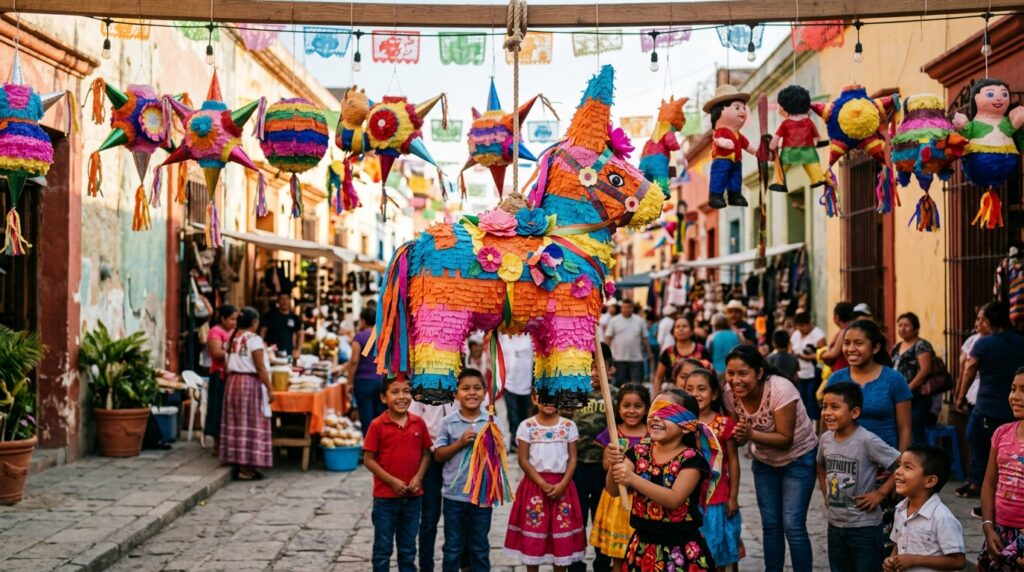
For ordinary party use, strengthen seams and hanging areas with extra paper layers while leaving the main shell comparatively light. This approach supports the form without making the whole object too difficult to break.
Fiberglass Reinforcement and Safety Limits
Fiberglass cloth and resin can create a highly resistant outer shell, but this is generally unsuitable for a piñata meant to be struck open. Resin products may release hazardous fumes, and cured fiberglass can produce sharp, difficult-to-handle fragments if damaged.
When such materials are used for a non-breakable display object, follow the manufacturer’s safety directions, including ventilation and appropriate protective equipment. Avoid presenting a resin-coated object as a normal party piñata; the safest choice for a game is a paper-based construction designed to break predictably.
For a durable pinata construction that remains appropriate for play, focus on sound joints, well-overlapped paper and a secure hanging point—not an unbreakable outer shell. This distinction keeps the craft’s strength aligned with its purpose.
Finishing Methods That Preserve the Shell
Once the final coat is fully dry, smooth rough edges with medium-grit sandpaper, taking care not to wear through the paper shell. A lightweight primer can prepare the surface for paint, while water-based poster paints are a practical choice for decorating paper mâché.
Bright crepe-paper streamers add texture and color without placing much weight on the structure. Apply them after the shell is dry, and keep decorations clear of the hanging point and any planned opening.
| Construction choice | Effect on strength | Best suited to |
|---|---|---|
| Several thin paper coats | Even, adjustable firmness | Traditional breakable piñatas |
| Reinforced seams and joints | Improves support at stress points | Large or irregular shapes |
| Fiberglass cloth and resin | Creates a highly resistant shell | Non-breakable decorative objects |
Good finishing protects the work without undermining its intended function. When the shell, support and decoration are planned as one system, the result is both more reliable and better suited to the occasion.