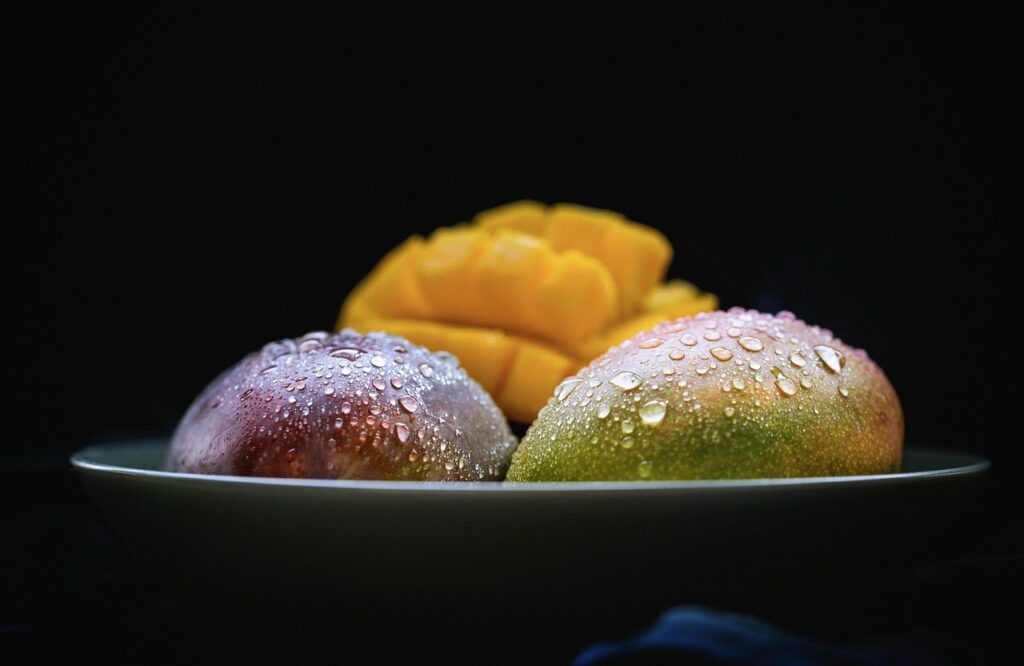
For wholesalers, mango quality is shaped well before fruit reaches a distribution centre. Harvest maturity, the mango ripeness stages at dispatch and the temperature history in transit all influence firmness, flavour, appearance and the time available for sale.
The challenge is to slow ripening without exposing fruit to chilling injury or trapping it in unsuitable conditions. A reliable plan links careful postharvest handling with cultivar-aware cold chain management, appropriate humidity control and disciplined ethylene management. The aim is not simply to keep mangoes cold: it is to move them through the supply chain at the right physiological stage, with storage settings that protect both eating quality and shelf life.
Mango ripeness stages and harvest maturity
Harvest maturity sets the starting point for every later decision. Mangoes picked too early may fail to develop satisfactory sweetness, aroma or texture, while overmature fruit can soften rapidly and arrive with little time for wholesale distribution.
Because skin colour varies by cultivar and may not reliably indicate internal development, buyers and handlers assess several signs together. The following indicators help distinguish fruit that can withstand transport from fruit nearing the ready-to-eat stage:
- Shoulder shape and fullness: A more developed profile can indicate that the fruit has progressed beyond an immature stage, though cultivar differences matter.
- Firmness and flesh condition: These help reveal whether mangoes are firm enough for handling or already advancing towards ripeness.
- Dry matter or soluble solids: Where available, measurements can support harvest decisions and provide a more objective complement to visual inspection.
- Lot uniformity: A consistent maturity range makes it easier to manage ripening and allocate stock for different sales windows.
For wholesale lots, the practical goal is usually to harvest physiologically mature fruit that remains firm, rather than fruit that is already soft. A maturity check at intake prevents later cold settings from being used to compensate for an unsuitable harvest.
Harvest maturity and destination timing
Fruit intended for a longer journey generally needs adequate physiological development while retaining firmness; mangoes destined for nearby distribution may be handled closer to the consumption stage. Neither route should rely on colour alone, since varieties differ in how their skin changes as the flesh ripens.
Once maturity is established, temperature can slow the pace of change—but only within a safe range for the cultivar and ripeness stage.
Mango storage temperature and cold chain management
Temperature control should begin promptly after harvest and remain consistent through packing, transport and wholesale storage. For many mangoes, a setting around 12–13°C is used for mature-green fruit, but the suitable range depends on cultivar, maturity, exposure time and the handling protocol in use.
Temperatures that are too low can cause chilling injury, particularly in less-ripe fruit. Symptoms may include uneven ripening, poor flavour development, pitting or discoloration; damage can become apparent only after the fruit is returned to warmer conditions. Riper mangoes are generally less susceptible, but this does not make uncontrolled cold exposure safe.
| Supply-chain condition | Typical management approach | Quality consideration |
| Mature-green fruit in transit | Maintain a cultivar-appropriate range, often near 12–13°C | Limit chilling risk while slowing ripening |
| Partially ripe wholesale stock | Adjust temperature according to fruit condition and intended turnover | Preserve firmness without stalling normal ripening |
| Ripe fruit awaiting sale | Use a shorter holding period and avoid excessive cooling | Protect aroma, texture and eating quality |
| All stages | Keep air circulation consistent and monitor product temperature | Reduce warm spots and temperature fluctuations |
These figures are operating references, not universal specifications. A commercial protocol should be validated for the cultivar and shipment duration, with temperature measured near the fruit rather than inferred only from the refrigeration unit’s display.
Block contains unexpected or invalid content.
Attempt recovery
Cold chain management at transfer points
Loading docks, inspection areas and vehicle changes can interrupt an otherwise stable cold chain. Brief warming may accelerate respiration and ripening, while poorly placed air vents or tightly packed cartons can leave some fruit warmer than the recorded room temperature.
Consistent temperature records, suitable crate ventilation and careful loading help reveal these weak points. The best cold chain is not the coldest one; it is the one that avoids damaging extremes and keeps conditions steady.
Mango humidity control and postharvest handling
Temperature alone cannot preserve wholesale mango quality. Relative humidity is commonly managed at a high level, often around 90–95%, to limit water loss and shrivelling, while airflow and sanitation help prevent condensation and decay.
Postharvest handling also affects how well fruit tolerates transport. Gentle transfer, clean equipment and protection from compression reduce bruising and skin damage, which can accelerate deterioration. Cartons should provide adequate ventilation without exposing mangoes to excessive dehydration.
At receiving and dispatch, teams can use a simple quality review to identify risks before they spread through a lot:
- Inspect representative fruit for bruising, decay, shrivelling and uneven development.
- Compare pulp firmness and visible condition across the shipment, not just at the outer cartons.
- Review temperature records and note any interruptions during transport or storage.
- Separate fruit by maturity when different sales or ripening schedules are required.
Such checks connect physical condition with handling history. If condensation appears, the response should address the cause—such as temperature swings or restricted airflow—rather than merely drying the carton surface.
Mango ethylene management and controlled atmosphere storage
Ethylene is a natural ripening signal, so its movement through a wholesale facility can affect the speed and uniformity of fruit development. Separating mangoes by ripeness, controlling exposure to external ethylene sources and keeping ripening rooms distinct from holding areas support more predictable inventory management.
Controlled atmosphere storage can further slow physiological change by adjusting oxygen and carbon dioxide around the fruit. These settings must be tailored to cultivar, maturity and storage duration: unsuitable gas levels or prolonged exposure may impair flavour or cause internal disorders. Atmosphere control complements temperature management; it does not replace it.
Shelf-life preservation through coordinated settings
Effective shelf-life preservation comes from treating maturity, temperature, humidity, airflow and ethylene as connected controls. A shipment harvested at the right stage can still lose quality if it warms repeatedly, dries out or is exposed to an unsuitable atmosphere.
For wholesalers, the clearest measure of success is fruit that ripens evenly and retains acceptable firmness, aroma and flavour through its planned distribution window. A qualified postharvest or cold-chain professional can assess cultivar-specific requirements and help establish a handling protocol suited to the product and route.